Search for Posts, Maps, and Topics

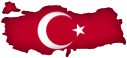 Officially known as Türkiye Cumhuriyeti or the Republic of Turkey, TÜRKIYE (Turkey) is a geographically diverse and predominantly Islamic country that straddles two continents. A small peninsula is in Europe, and the rest of the mainland is in Asia. Turkey borders seven countries: Bulgaria, Greece (both in Europe), Armenia, Iran, Iraq, Georgia, and Syria (the latter countries are in Asia). The capital is Ankara, which is the second largest city in Turkey. Istanbul, which developed alongside the Bosporus (also known as Istanbul Strait or İstanbul Boğazı), is the largest city and is often mistakenly thought of as Turkey's capital. Located close to the border with Azerbaijan, Mount Ararat (5137 meters, or 16,854 feet) is the highest peak. Turkey's currency is the Turkish Lira, and its ISO 4217 currency code is TRY.
 RUSSIA, formerly the largest portion of the Soviet Union (USSR), is the largest country in the world spanning from northern Europe to eastern Asia. Russia shares borders with 14 countries: Azerbaijan, Belarus, China, Estonia, Finland, Georgia, Kazakhstan, Latvia, Lithuania, Mongolia, Norway, North Korea, Poland, and Ukraine. Russia also has an exclave called Kaliningrad, located in Europe southwest of Lithuania and north of Poland. The capital and largest city of Russia is Moscow (Moskva). The currency is the Russian Ruble, and its ISO 4217 currency code is RUB.

 GEORGIA, a Eurasian country in Asia, is located above Azerbaijan and Armenia. Georgia's northern portion is sometimes considered to be in Europe. This country borders the eastern side of the Black Sea and is north of Turkey and south of Russia. The capital of Georgia is Tbilisi (T'bilisi), which is located in eastern Georgia. Other major cities include Sokhumi, Bat'umi, K'ut'aisi, and Rust'avi. Like T'bilisi, these cities are sometimes spelled without apostrophes. Almost three-fourths (75%) of the population is of the Georgian ethnicity. Other people living in Georgia include Azeris (from Azerbaijan), Armenians, and Russians. The Georgian Orthodox tradition has the most worshippers in Georgia. The currency is the Georgian Lari, and its ISO 4217 currency code is GEL.
VATICAN CITY (Holy See) is the smallest country in the world and serves as the Catholic Pope's home. It is a microstate, a country which has a small area and small population. Vatican City's area is 0.44 sq. kilometers, and the population hovers around 800. The country is located within Rome and completely surrounded by Italy. This means that Vatican City is an enclave just like Lesotho and San Marino. This country has a fortified wall surrounding it. The capital is Vatican City, just as the capital of San Marino is San Marino, the capital of Luxembourg is Luxembourg, and the capital of Monaco is Monaco. The currency is the Euro, and the previous currency was the Vatican Lira. VAL was the Vatican Lira's ISO 4217 currency code. In alphabetical order, Vatican City is the last country in Europe.
 Sometimes referred to as Great Britain, the UNITED KINGDOM of Northwestern Europe constitutes the "countries" of England, Northern Ireland, Scotland, and Wales. The kingdom borders the Celtic Sea, English Channel, Irish Sea, and the North Sea. The Celtic Sea is near the Saint George's Channel between southern Ireland and the United Kingdom, while the English Channel is situated between the U.K. and France located further southeast. The United Kingdom possesses multiple archipelagos and islands, including Isle of Man (located in Irish Sea), Channel Islands, Orkney Islands, and Shetlands Islands. Administratively divided into two bailiwicks (Guernsey and Jersey), the Channel Islands are aptly located in the English Channel.
  The national capital is London, a well-known city with more than 7,000,000 residents. London hosted the 2012 Summer Olympics, attended by over 200 countries and territories. United Kingdom's currency is the Pound, and its ISO 4217 currency code is GBP.
 UKRAINE is a former-Soviet country located in Eastern Europe, bordering 7 countries: Belarus, Hungary, Moldova, Poland, Romania, Russia, and Slovakia. The country also borders the Black Sea. Jutting out into the Black Sea, the Crimean Peninsula separates the Sea of Azov — a mostly enclosed water feature to the east — from the larger Black Sea. According to Encyclopædia Britannica, Ukraine’s population in the year 2020 was about 44,237,000 and was ranked 31st among populations of the whole world’s countries, dependencies, and territories. The capital and most-populated city is Kiev (Kyïv or Kyyiv). The currency is the Hryvnia, and its ISO 4217 currency code is UAH.
Crimea Annexation and Dispute
After Russia militarily took over the Crimea peninsula and autonomous republic starting in February 2014, the Autonomous Republic of Crimea's government instituted a March 2014 referendum to find out if Crimean residents wanted to still live in Ukraine or have Crimea secede to Russia. Allegedly, most Crimeans voted for Russia to proceed with annexation of their territory. Due to Russia's military presence in Crimea, various officials and international-relations scholars argue that the referendum was biased and/or pressured Crimeans to vote to secede to prevent an escalation of Russian force. A United Nations' General Assembly resolution in March 2014 declared the Crimean referendum and Russia's annexation as non-legitimate, thereby supporting Crimea remaining as a Ukrainian territory. A majority of UN member states — 100 out of 193 — approved the UN resolution, while 58 abstained from voting. Meanwhile, Eleven member states voted against this resolution — these countries are Armenia, Belarus, Bolivia, Cuba, Nicaragua, North Korea, Russia, Sudan, Syria, Venezuela, and Zimbabwe.

 Officially known as the Swiss Confederation (Confederatio Helvetica), SWITZERLAND is located in Central Europe, bordering 5 countries: Austria located to the east, France to the west, Germany to the north and northeast, Italy to the south and southeast, and the small principality of Liechtenstein to the east. Switzerland is called Helvetica in the Latin language and Schweiz in the German language. The capital is Bern. The currency is the Swiss Franc, and its ISO 4217 currency code is CHF. Unlike surrounding countries, Switzerland (and Liechtenstein) decided to stick with its original currency instead of switching over to the Euro.

 Partially north of the Arctic Circle, SWEDEN (Sverige) is located in Northern Europe on the Scandinavian Peninsula and northeast of Denmark, west of Finland, and east of Norway. The Baltic Sea and the Gulf of Bothnia are east of Sweden. The capital is Stockholm, the largest city in Sweden and of all the Scandinavian countries: Denmark, Finland, Iceland, and Norway. Other cities include Göteburg, Helsingborg, Jonkoping, Linköping, Malmö, Norrköping, Orebbro, Umeå, Uppsala, and Vasteras. The currency of Sweden is the Swedish Krona, which has SEK as the ISO 4217 currency code. As of early June 2023, Sweden did not adopt the Euro currency presently in use by 20 countries.
 SPAIN is located in western Europe on the Iberian Peninsula. Spain borders 3 countries: Portugal, France, and the tiny Andorra. Portugal is west of Spain and Andorra and France are northeast. Speaking of Andorra and France, the Pyrenees (Pirineos) mountain range serves as a natural border between northeastern Spain and southwestern France, with the small principality of Andorra completely surrounded by these mountains. The capital is Madrid, and major cities include
  Barcelona, León, Seville, and Valencia. Spain is divided up into autonomous communities, which are like regions. The currency is the Euro, and the previous currency was the Spanish Peseta. The Peseta's ISO 4217 currency code was ESP.

● Monday, June 24th, 1991 — The coat of arms and flag were designed.
● Tuesday, June 25th, 1991 — Slovenia's independence and sovereignty were established in a constitutional law, part of which created the Declaration of Independence. Annually, Slovenians celebrate Independence Day on June 25th.
● Wednesday, June 26th, 1991 — President Milan Kučan declared independence on this date at a ceremony in the capital city's Trg Revolucije (Revolution Square) town square.
● ● ● ● ● People and Places ● ● ● ● ● According to the GeoFact of the Day Blog's 2016 estimate, Slovenia's national population is about 2,070,000. Straddling the Ljubljanica river, Ljubljana (Italian: Lubiana) is Slovenia's capital city and the home for about 275,000 residents (2016 estimate). Other cities and communities include Celje, Jesenice, Koper, Kranj, Maribor, Novo Mesto, Trbovlje, and Velenje. For the most part, citizens of Slovenia originate from the Slav people and communicate using Slavic languages. Due to the country's centralized location in Europe, people of neighboring nationalities — Albanians, Austrians, Bosniaks, Croatians, Hungarians, Italians, and Serbians, among others — form a fairly large minority. Regardless, over 83% of residents are part of the Slovene ethnic group.
In recent months and years, Slovenia and fellow European states became vulnerable to the massive Middle Eastern refugee crisis and decided to close their borders. Slovene is Slovenia's official language, and other predominant languages used for communication are as follows: Gheg Albanian, Croatian, German (standard), Hungarian, Italian, Sinte Romani, and the Slovene Sign Language. Over 90% of religious people are Christians, followed by Muslims, Bahá'i believers, and Jews.
● ● ● ● ● Land and Water Features ● ● ● ● ● Slovenia's topography is largely mountainous but also includes the Pannonian Lowlands in the northeast, Kras Plateau in the southwest near Trieste in Italy, and hills and valleys throughout Slovenia. The country's northern border straddles the Karavanke mountain range, while the Julian Alps stretch across northwestern Slovenia and northeastern Italy. The Julian Alps include the tallest peak — Triglav, standing at an elevation of 9,396 feet and 2,364 meters — and as well as some of Slovenia's largest lakes.
As shown in GeoFact of the Day Blog's Photo of the Day post, Lake Bled (Blejsko Jezero) provides a popular canvas for photographers to snap pictures because the fascinating 17th-century Church of the Assumption sits on an island. Another architectural wonder is Bled Castle, placed on a lakeshore cliff over 400 feet above Lake Bled. Lake Bohinj (Bohinjsko Jezero) has a surface area of 3.18 km² and is the Alpine country's largest permanent lake. Rivers include Drava, Krka, Kupa (Kolpa), Mura, Sava, Savinja, and Soča.
GeoFact of the Day Blog updated this post with more info on October 14th, 2016. The map was added to this post on November 28th, 2016.


 SLOVAKIA is located in Central Europe, bordering 5 countries: Austria, Czech Republic, Hungary, Poland, and Ukraine. The capital is Bratislava, which has a population greater than 425,000. Other cities include Banská Bystrica, Košice, Liptovský Mikuláš, Nitra, Prešov, Trnava, and Žilina. Since 2009, Slovaks use the Euro as their currency. The previous currency was the Slovak Korun, and its ISO 4217 currency code was SKK.
 Officially known as the Republic of Serbia (Republika Srbija), SERBIA (Srbija) was formerly part of Yugoslavia and is located in Southeastern Europe. Serbia borders 8 countries: Bosnia and Herzegovina located to the west of Serbia, Bulgaria to the east, Croatia to the west, Hungary to the north, Kosovo to the south, Macedonia to the south, Montenegro to the southwest, and Romania to the northeast. The capital is Belgrade (Beograd). Serbia's currency is the Serbian Dinar, and its ISO 4217 currency code is RSD.

The Republic of SAN MARINO (Republica di San Marino) is a tiny country located in Southern Europe, and the country is an exclave completely surrounded by Italy's northeastern area. The capital is San Marino, and other communities include Acquaviva, Borgo Maggiore, Chiesanuova, Domagnano, Faetano, Falciano, Fiorentino, La Dogana, Monte Giardino, and Serravalle. The currency is the Euro, and the previous currency was the Sammarinese Lira (related to the Italian Lira). The ISO 4217 currency code of the Sammarinese Lira was SML.
This post included a new map since August 25th, 2016.

 ROMANIA, located in Eastern Europe, has access to the Black Sea and has a famous river (Danube River) flowing through the southern part of the country - mostly along the southern border line. Romania is north of Bulgaria, east of Hungary and Serbia, west of Moldova, and south and southwest of Ukraine. The capital and largest city of Romania is Bucharest (Buchareşti). The currency is the Romanian Leu, and its ISO 4217 currency code is RON.

 PORTUGAL is located in Western Europe on the western part of the Iberian Peninsula. Therefore, it is west of Spain. The capital is Lisbon, also spelled Lisboa in Portuguese. The currency is the Euro, and the previous currency before 1999 was the Portuguese Escudo. The Escudo's ISO 4217 currency code was PTE.

Click here to enlarge the map in a new window. This map is available as a wall map courtesy of Eric Olason at Maps.com.
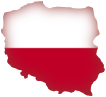 In existence for over 1,000 years, POLAND is located in Central Europe. Poland borders six countries and one territory (from west going counterclockwise): Germany, Czech Republic, Slovakia, Ukraine, Belarus, Lithuania, and Kaliningrad (a small exclave that is part of Russia). Poland has 16 provinces called voivodeships, which are featured in this GeoFact of the Day Blog post containing a map. Two voivodeships in Southern Poland - Malopolskie and Ślaskie - have the highest population densities in the country. You can find out more details about Poland's population density with this post. The capital and most-populated city of Poland is Warsaw (Warszawa). The currency is the Złoty, and the ISO 4217 currency code is PLN.

 Partially located along the Arctic Circle, NORWAY (Norge) is located in Northern Europe. Norway is considered a Scandinavian country, situated along the large Scandinavian Peninsula's western coast and located west of Sweden and Finland. Mostly surrounded by large water bodies, Norway is east of the Atlantic Ocean and Norwegian Sea, north of the Skagerrak strait separating Norway from Denmark in the south, and northeast of the North Sea. The total population exceeds 5,100,000 as of April 2015. The capital and most-populated city of Norway is Oslo. Other cities include Bergen, Bodø, Kristiansand, Tromsø, and Trondheim. The currency is the Norwegian Krone, and its ISO 4217 currency code is NOK.

 Commonly known as Holland, the NETHERLANDS (Dutch: Nederland), a Benelux Country (Low Country), is located in Western Europe. It borders the North Sea and the countries Belgium (located south) and Germany (east). The Netherlands is particularly famous worldwide for its windmills, levees and dikes, tulips, dairy products, and those wooden shoes, of course! According to Encyclopædia Britannica, the Netherlands’ population in the year 2020 is about 17,427,000 and is ranked 69th among populations of the whole world’s countries, dependencies, and territories. The main capital of The Netherlands is Amsterdam, although The Hague (also named Den Haag or 's-Gravenhage) is where the monarchial, supreme court, and parliament systems are located. Other most-populated cities include Almere, Breda, Eindhoven, Groningen, Heerlen, Maastricht, Nijmegen, Rotterdam, and Utrecht. Since 2002, the Euro is Netherlands' currency. Dutch people formerly used the Dutch Guilder as their currency, and the Guilder's ISO 4217 currency code was NLG.


 MONTENEGRO (Crna Gora, "Black Mountain") is located in Southeastern Europe. This country, which was formerly part of Serbia, borders the Adriatic Sea and 5 countries: Albania, Bosnia and Herzegovina, Kosovo, and Serbia; Montenegro has a small border with Croatia. The capital of Montenegro is Podgorica. Montenegrin is the country's official language. An annual celebration on May 21st commemorates the independence of Montenegro (2006) from the larger Serbia and Montenegro country. July 13th is also celebrated for the Berlin Congress declaring Montenegro as independent in 1878. The former currency of Montenegro was the Deutsche Mark of Germany, which was used until 2002. Currently as of April 2016, the Euro is used by Montenegrins. The country does not circulate Euro coins with its own national designs, although this could change in the future.

 Officially known as the Principality of Monaco (Principauté de Monaco in French) and known for its casinos and racing events (Monaco Grand Prix, etc.), MONACO is a wealthy yet tiny country located in Western Europe. It is nestled along a picturesque Mediterranean Sea coastline, bordering France. The nearest major city to Monaco in France is Nice. Monaco's official language is French, while Italian, Ligurian (Monégasque), and Occitan (about 4,500 speakers) are also widely spoken languages. As of December 2015, Monaco's total population is 38,400; Monaco has the highest population density of any country in the world (the territory of Macau territory is even higher) with over 19,000 people per square kilometer. According to Ethnologue, the Monégasque language is Monaco's de facto language of national identity and is split into two major dialects: Genoese and Monégasque. Since Monaco is a city-state, its capital is indeed Monaco (Monaco-Ville). The state's four quartier regions are La Condamine, Monaco-Ville, Monte Carlo (home of the Auditorium Rainier III), and Fontvieville. The former currency of Monaco was the Monegasque Franc, and its ISO 4217 currency code was MCF. The Monegasque people used this currency until 2002, when the Euro became Monaco's currency.
This post was updated on July 29th, 2016.

Blog Content
● The author of this GeoFact of the Day Blog creates and curates original, authentic content and posts information based on established facts. Blog posts are not generated by artificial intelligence (AI) but published by the author.
● Content and image graphics from other sources are properly credited. Many geography facts are well-established and therefore do not belong to any one source, but occasionally a fact requires attribution/credit if it is unique and hard-to-find — for example, facts found from specific cultural, anthropological, geological, and scientific (etc.) research.
● I do not copy and paste from other websites. Therefore, all posts are original but may sometimes include information, links, and/or images from credited external sources. To use a GeoFact of the Day Blog image for your website or project, write a comment below a post — then I may approve your request.
● Feel free to offer comments, suggestions, and compliments on any post or page! You can be anonymous. Spam comments with non-relevant links will be deleted.
● Thanks for your loyal readership on the educational and reliable GeoFact of the Day Blog, in existence since 2008!


